I provide, technical articles, civil engineering standard, construction standards, testing methods, FAQ, MCQ, new idea, Questions, complaint handling, general notes, Drawings, helping tips, open discussion, decision making idea, where is wrong, what is right, high rise building, tile and adhesive, grouts, concrete repair mortar, epoxy flooring, Polyurethane floorings and many other construction chemical related answers. Helping students, job interview questions, site works, application video.
The pencil hardness test as per ASTM D 3363, AS 1580.405.1, ISO 15184:1998 ISO 15184, ASTM D3363, JIS K-5600, ECCA-T4-1, BS 3900-E19, SNV 37113, SIS 184187, NEN 5350, MIL C 27 227 and NCCA II-12, also referred to as the Wolff-Wilborn test, uses the varying hardness values of graphite pencils to evaluate a coating’s hardness. Watch the testing video:
When coatings are applied at wall / ceiling surfaces, coated
material may sag. So before applying the coating material, it can be tested at
what thickness it may sag and at what thickness it will not.
ASTM C270, is almost similar to EN 1015-11, but size of the specimens may change.
In
the below video, soil shrinkage is tested. Similarly, for other products can be
tested by adopting the mixing ratio and process.
Flexural Strength and Modulus of Elasticity of Chemical-Resistant Mortars, Grouts, Monolithic Surfacings, and Polymer Concretes ASTM C580-02(2012): This test method covers the determination of flexural strength and modulus of elasticity in flexure of cured chemical-resistant materials in the form of molded rectangular beams. These materials include mortars, brick and tile grouts, structural grouts, machinery grouts, monolithic surfacings (60 mils or greater), and polymer concretes. These materials shall be based on resin, silicate, silica, or sulfur binders.
A bar of rectangular cross section is tested in flexure as a simple beam in center point loading: the bar rests on two supports and the load is applied by means of a loading nose midway between supports.
Method A outlines the testing procedure generally used for systems containing aggregate less than 0.2 in. (5 mm) in size. Method B covers the testing procedure generally used for systems containing aggregate from 0.2 to 0.4 in. (10 mm) in size. Method C is used for systems containing aggregate larger than 0.4 in.
Let see what does BS 6319 says:
As per EN 1348, In the below video, cement mortar is tested. Similarly, for other products like epoxy and PU, etc can be tested by adopting the mixing ratio and process as per manufacturer's specification.
Tensile Strength of Chemical-Resistant Mortar, Grouts, and Monolithic Surfacings ASTM C307-03(2012):
This test method covers the determination of tensile strength of cured chemical-resistant materials in the form of molded briquets. These materials include mortars, brick and tile grouts, machinery grouts, and monolithic surfacings. These materials shall be based on resin, silicate, silica, or sulfur binders.
Let see what does BS 6319:7 say about the testing:
This test method offers a means of comparing the relative linear shrinkage and coefficient of thermal expansion.The material to be tested is placed in the mold in a fluid or plastic state. As the material makes a transition to a solid state, it adheres to and captures the end studs. The linear shrinkage measured is the change in length that occurs after the material is rigid enough and strong enough to move the studs.
In the below video, soil shrinkage is tested. Similarly, for other products can be tested by adopting the mixing ratio and process.
Coating on substrates can be damaged by abrasion during manufacturing and service. This test method has been useful in evaluating the abrasion resistance of coatings. Ratings produced by this test method have correlated well with ratings produced by the falling abrasive values in Test Methods D968. For some materials, abrasion tests utilizing the Taber Abraser may be subject to variation due to changes in the abrasive characteristics of the wheel during testing. Depending on abrading type and test specimen, the wheel surface may change (that is, become clogged) due to the adhesion of debris generated during the test and must be refaced at more frequent intervals as agreed upon by the interested parties. To determine if more frequent refacing is required, plot the total weight loss every 50 cycles. If a significant negative change in slope is observed prior to 500 cycles, the point at which the slope changes determines the refacing frequency.
Taber Abrasion Tester(Taber
Abraser). To determine the wear resistance of all kinds of structures including
fabrics, leather and rubber, paper, metals, paints, plated surfaces, coated
materials, glass etc.
Relative Resistance to Wear of Unglazed Ceramic Tile by the Taber Abraser ASTM C501 - 84:
This test method covers the establishment of an abrasive wear index by determination of the loss of weight resulting from abrasion of unglazed ceramic tile by Taber Abraser. The test method consists of mounting the tile specimens in suitable holders, attaching the mounted holders to the spindle of the Taber Abraser, and subjecting the specimens to a prescribed number of revolutions under abrasive wheels of specified coarseness and under a definite applied load. The apparatus consists of Taber abrading machine, vacuum pick-up, revolution counter, wheel refacer, and balance. The procedure of sampling and mounting the test specimen are detailed. The formula for calculating the abrasive wear index from the loss of weight due to abrasion is given.
As per IS 15658, the abrasion resistance of blocks of pave, can be tested as follows:
As per IS 1237 and IS 13630 part 13 also explains the requirement of wear for specific areas.
This same shall be used for cementitious flooring and floor hardeners.
As per BS EN 8204 part 2, abrasion results can be considered as: Classification of abrasion resistance and limiting depths of wear for the abrasion test: recommendations for concrete bases, directly finished (DF) only, as wearing surfaces
Classification of abrasion resistance and limiting depths of wear for the abrasion test: Recommendations for concrete bases upgraded by dry shake/sprinkle finishes and for applied wearing screeds (WS)
Let see how to test the abrasion resistance on the installed floor and rank the floor:
Tests are carried out using our purpose designed and built equipment which conforms to the requirements of BS EN 13892-4: 2002. Known as the determination of wear resistance BCA accelerated test machine, the floor surface is assessed by measuring the depth of wear created by three hardened wheels rotating over a ring shaped area for a standard number of revolutions.
A floors ability to resist abrasion is a very important factor. To carry out an abrasion test, eight test locations are marked on the floor using a machined template. Readings are then taken at each of the eight test locations using a digital depth gauge. The accelerated abrasion resistance testing machine is then bolted into place through pre-drilled fixing holes The machine then with its three steel hardened wheels and a combined weight of 65kg then rotates 2850 revolutions plus or minus 10 After the test the machine is removed and the digital depth readings are then taken at each of the eight locations again. The difference between the average two sets of readings gives a measure of the floors abrasion resistance. Detail and video curtsey: https://face-consultants.com/abrasion-resistance-testing/
Compression tests provide information about the compressive properties of plastics when employed under conditions approximating those under which the tests are made.
Compressive properties include modulus of elasticity, yield stress, deformation beyond yield point, and compressive strength (unless the material merely flattens but does not fracture). Materials possessing a low order of ductility may not exhibit a yield point. In the case of a material that fails in compression by a shattering fracture, the compressive strength has a very definite value. In the case of a material that does not fail in compression by a shattering fracture, the compressive strength is an arbitrary one depending upon the degree of distortion that is regarded as indicating complete failure of the material. Many plastic materials will continue to deform in compression until a flat disk is produced, the compressive stress (nominal) rising steadily in the process, without any well-defined fracture occurring. Compressive strength can have no real meaning in such cases.
Compression tests provide a standard method of obtaining data for research and development, quality control, acceptance or rejection under specifications, and special purposes. The tests cannot be considered significant for engineering design in applications differing widely from the load-time scale of the standard test. Such applications require additional tests such as impact, creep, and fatigue.
Before proceeding with this test method, reference should be made to the ASTM specification for the material being tested. Any test specimen preparation, conditioning, dimensions, and testing parameters covered in the materials specification shall take precedence over those mentioned in this test method. If there is no material specification, then the default conditions apply. Table 1 in Classification D4000 lists the ASTM materials standards that currently exist.
BRE (British Research Equipment) screed test is used to strength of the screed regarding
the resistance of the screed surface to the indentation and is tested as
follows:
The BRE screed test can be unsuitable for assessing floating screeds thinner than the recommended 75 mm for categories A and B and 65 mm for category C. However, if a floating screed is laid thinner than that recommended and it passes the test then it can be considered satisfactory. - From Page No 39 - BS 8204-1:2003+A1:2009
On of the major material in construction is sieve analysis
test as per BS 410 to assess the particle size distribution (also called
gradation) of a granular material. The size distribution is often of critical
importance to the way the material performs in use.
Sieve analysis and choosing the fixed results plays
important role in compression strength, tensile strength, surface finish,
surface tensile strength, work-ability activities like compaction, finishing,
etc.
Let’s look how the sieve analysis test for sand is tested as
per BS 410:
I myself Mr Chandrashekar knowing languages like English, Urdu, Hindi, Kannada, Telgu, Tamil, and quite
Arabic and Malayalam.
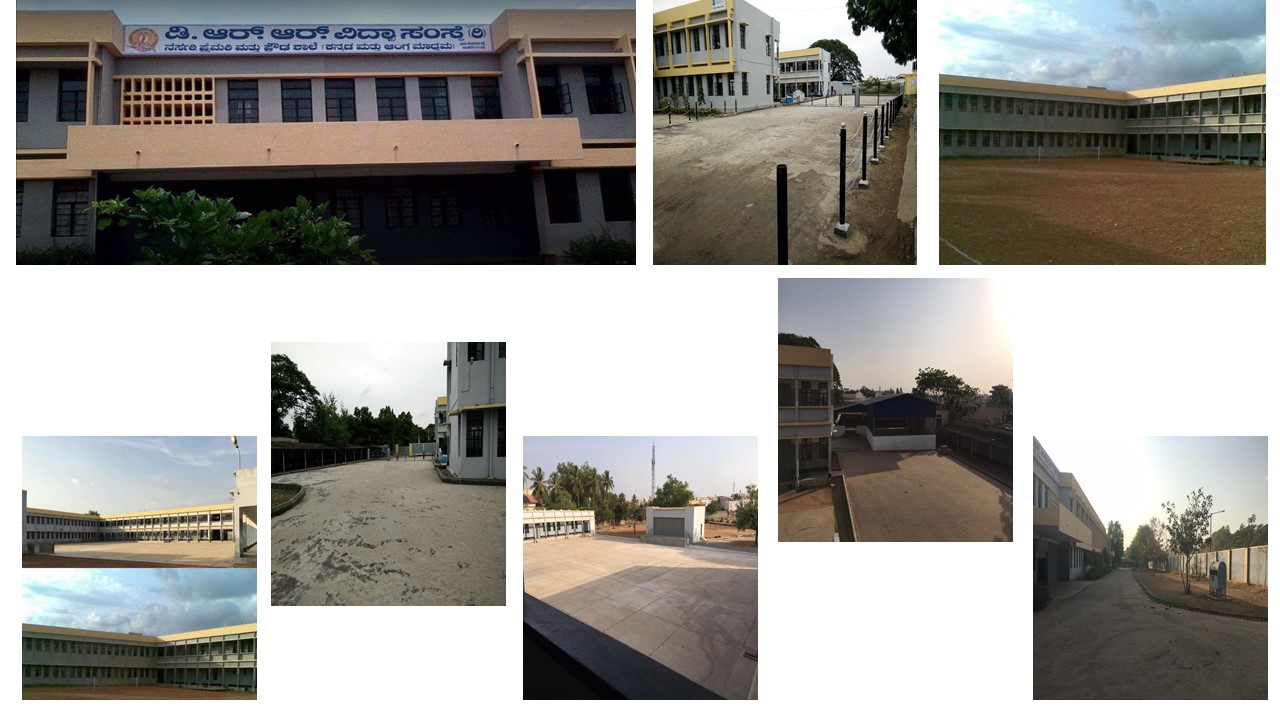
I started with DRR School.
In this school, I
completed SSLC on April 1997 including President scout award and district level
foot ball competition. Some of the photos of that time with our teacher and classmates:
Photo from Lower Kinder Garten with Yashodha Mam DRR School
Photo from Upper Kinder Garten with Girija Mam DRR School
Photo from 1st standard with Shobha Mam DRR School
Photo from 5th standard with Lalith Mam DRR School
Photo from 6th standard with Ashalatha Mam DRR School
Photo from 7th standard with Shobha Mam DRR School
I Completed Diploma in
Civil engineering, from Board Of Technical Examination on May 2000 in First class. Have look at DRR Govt
Polytechnique College:
For first 1 year I was associated with:
1. Kalparuksha
consultants – works on estimates, plan preparations for valuations
2. Arun constructions –
residential construction company
3. Annapurna
construction – repair of concrete and masonry works using FOSRCO chemicals.
4. Assisted to Zilla Panchayat chief engineer –
government engineer works for road, canals, bund constructions, repair of Government
buildings, etc.
In these 4 company I worked
on estimates, tender documents, Bill of works, manual drawing, AutoCAD,
measurements, canal works, building constructions, repair works, layout
designing, setting-out works and team handling. During these days I am very
much interested in the field of drafting and surveying as this fields connect
many branches of civil engineering and with a lot other engineering fields like
mechanical, electronic and others. I got an offer from Bangalore, Karnataka and
then I shifted myself to start the actual journey of carrier.
I joined ABEL ENGINEERING AND SURVEY CONSULTANTS - #2037,
7th main D-Block, Rajajinagar, 2nd stage, Bangalore-5660010, Karnataka, INDIA
and worked from August, 2001 to August,
2004 as Junior Engineer (Surveying/Cad).
Here I worked on surveying, setting out and preparation of detailed drawings of
Under Ground drainage works, Fly overs, Bridges, Tank Bunds, Highway roads,
Layouts, Canal works, Power plants, Sewage Lines, High Tension Towers….Etc., In
this company I got opportunity to enhance my skills in drafting software like AutoCAD,(Micro
station) Cad overlay, LDDT, (Visual LISP),P3, GIS SOFTWARES(MapInfo). And I
used many EDM like Leica (set 500, 702, 1100, 1200), Sokkia (set 2C, 3C,
210,5100 and GPS-Meridian GPS.
After completing 4
years of journey, I decided to strengthen my family financially and thought to
go abroad to work in the same surveying and drafting field. Accordingly attend
interview and selected for KUWAIT.
From august 2004 to august 2006 I joined UINTED GULF CONSTRUCTION
COMPANY, P.O.
Box 74854, Al-Shuak Khobar 1147, KUWAIT as Senior Engineer (Surveying). Here I handled the project Infrastructure development of Agila city which includes in construction of Sewage
Pipe lines, Water supply Pipe lines, Storm water pipelines, Kerb stones,
Asphalting Works, Retaining walls, Bridges, Culverts, Electrical lines,
Telephones lines…Etc., The contract was for 2 year time and in this period I
worked for Agila project including some other project on demand.
After contract
finished, I planned to move for other country for higher salary once again. I
came back to INDIA and attend the interview for job in Saudi Arabia.
From August, 2006 to Aug 2008 I worked in BIN QURAYA EST, P.O.
Box 32058, Al-Khobar 31952, Kingdom of Saudi Arabia as Senior Engineer (Civil). Here I work as a civil engineer dealing
with development of petrochemicals well sites like Water interface Manifolds,
Oil interface Manifolds, Oil well Heads, Water well Heads and in Waste water
Treatment Plants which includes the installation of pipe lines systems, pre
cased structures, concreting and repair works.
At this time, I planned
to take care of my family and settle down in INDIA. Accordingly I came and
joined a company in INDIA and also got married.
On Nov, 2008 to 2010 Aug I joined IDEB Projects (P) Ltd., 9th
floor, Delta Tower, Sigma Soft Tech Park, #7, White field Main Road, Opp.
Varthur Lake, Bangalore-560066 Senior
Engineer for project called Bangalore metro Reach 3. My work was dealing with Construction
Execution of Metro Rail for 6 Kilometer which includes the setting works, construction
of piles, pile caps, crush barrier, pier, pier caps, segment launching, track
works…Etc.,
This company was black
listed by BMRCL due to a backlog in execution, ir-responsive management, lack of equipment
and manpower. At this stage of my life I had crossed beginner stage to training
level, I quit this company and decided to work in hierarchy management level
that to in the stage where I can manage the team by providing training and
share my experience my knowledge to team. I got new offer and started my
carrier in new style.
I joined AE (I) Pvt Ltd as manager –
Technical specification in CTS (Central Service) Department. Here I am working
at pan INDIA level mainly providing technical support to sales team and Technical executive team.
I with the assistance
of one chemical engineer and one lady civil engineer, heading CTS team of 23
Technical executives located at major places in INDIA. I will be providing guidelines
and instructions in handling site may it be sampling, supervision, site visit,
complaint handling and Training the applicator teams at site level.
I also provide back end
support to sales team of 323 member (both Institutional and industrial segment
and retail & project segment) including export sales division by helping
them with specifications, detailing the drawings, Material Take off, Technical
explanation, attending Technical meetings at site with client * site engineers,
etc. We also provides training to internal staff at 6 different levels for
sales team and technical executives. I also visit foreign site to crack the competitor
specifications and technical meetings.
On the other hand, internally
I also support LAB and R&D in development of new products with technical
inputs, marker stand on, construction standard backgrounds, etc. Marketing Department
will hand in hand working with our CTS team in the preparation of case study,
Technical articles, advertise write-up, commercial videos, TDS write-up, etc.,
Till date, I as Senior Manager and continuing my journey in AE (I) Pvt Ltd.
I shifted to Dubai, and then I joined Laticrete Middle East.
For more details,
contact me on annayya.chandrashekar@
gmail.com OR +91 9900 240 603.