Total Viewers

Translate

Search This Blog

Friday, June 8, 2018

Know always: What which, why, where, when and how?

What is the minimum and maximum.
Which is the highest and the lowest?

As per ASTM C 129 – 03: Standard Specification for Nonloadbearing Concrete Masonry Units: Weight Classification of structures are as follows:
Weight Classification                                  Oven-Dry Weight of Concrete, lb/ft3 (kg/m3)

Lightweight                                                  Less than 105 (1680) 
Medium Weight                                           105 to less than 125 (1680 to 2000) 
Normal Weight                                            125 (2000) or more


Low SlopesRoof pitches less than 4/12 are considered low sloped roofs. Special installation practices must be used on roofs sloped 2/12-4/12. Shingles can not be installed at slopes less than 2/12.


Recommended slope for wet areas like bath room, showers, toilet rooms, etc shall be 6mm down in 1 feet.


Minimum requirement of steel in RCC structures:

Grain sizeGrain size (granularity) shall be based on the size of the largest particles that are dispersed in sufficient quantity to influence the texture of the coating system. As per EN 1062, grain sizes (in the coatings) are classified as follows:
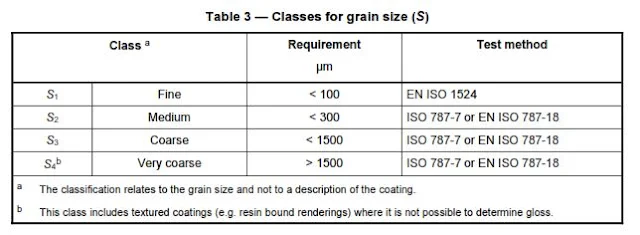
For the determination in accordance with ISO 787-7 and EN ISO 787-18 in the case of solvent-dilutable systems, a suitable solvent may be used in order to pour the dispersion through the sieve.

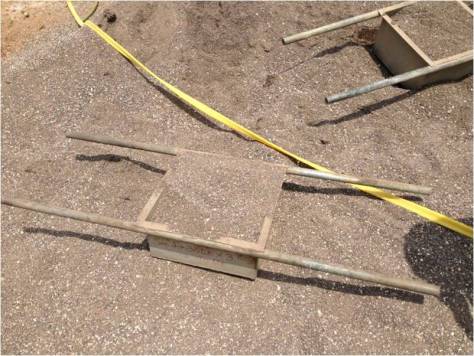
What is the standard size of cement measuring box?


12″ X 12″ x 15“ = 0.3 X 0.3 X 0.375 = 0.03375 Cmtr = 33.75

Another thing used to measure the cement is PAN:


1 bag of 50 Kg cement (0.03475 Cmtr = 4 pan X 0.86775 Cmtr.


What is good air and bad air?

Compression & tensile strength of brick, granite, lime stone, cement, concrete, sand stone, slate and trap rock:
Ref: https://themasonrystore.com/blogs/cold-hard-tuckin-faqs/choosing-the-proper-mortar-for-any-masonry-application-and-then-where-to-buy-it


Grading of natural and M-sand for cement mortar:


Some abbreviations: 
EPI - Ethoxylated Polyethy Iemine (for potable (portable also) grade metal water tanker coating)
MMRE - Malcic Modified Resin Esters (coating / paint for bitumen and concrete roads for line marking)
1 Megaohms = 1MO = 10^6O = 1,00,00,00O
IEQ - Indoor Environment Quality - Credit 4.1
OSHA - Occupational Safety & Health Act
PMMA - Polymer Methyl Meth Acrylate (Acrylic / Acrylic glass, flooring, coating are available)
WELL - 3rd party certificate by GBCI - Green Building Certification Inc.
GGBS - Ground Granulated Blast Slag (used in concrete in modern technology)
GRIHA - Green Rating for Integrated Habit Assessment
PVA - Dilute Poly Vinyl Actate (used to install the mesh at back of Glass mossaic tiles and some stones.
MPa - Mega Pascal = N/mm^2
HACCP - Hazard Analysis & Critical Control Points - Need for PU Flooring
PVC - Poly Vinyl Chloride
IPN / PU - Interpenetrating Polymer Network - A thickness gradient interpenetrating polymer network (IPN) was easily created that takes advantage of the relatively poor compatibility and curing rates discrepancy between epoxy (EP) and polyurethane (PU).
ESD - Electro Static Discharge
OWSAS - International Occupational Health & Safety Management. System Specification.
EHS - Environmental Healthy & Safety (it's a certification)
LEED - Leadership in Energy & Environmental Design.
MDI - Methyl Diphenyl Diisocyanate - is a chemical used in the production of polyurethanes for many applications. MDI is used primarily in the production of rigid polyurethane foams used for insulation for your home or refrigerator, and many other uses.
EPDM - Ethylene Propylene Diene Monomer
SBS - Styrene-Butadiene-Styrene
SBR - Styrene-Butadiene-Rubber
VOC - Volatile Organic Content

Poly Olefin based polymer systems:
  • App - Atactic Poly Propylene
  • APAO - Amorphous Poly Alpha Olefins
  • TPO - Thermo Plastic Olefin - membranes
  • IPP - Isotactic Poly Polypropylene - Sheet membranes
HAP - Hazardous air pollutants, also known as TAP - Toxic Air Pollutants or air toxics, are those pollutants that are known or suspected to cause cancer or other serious health effects, such as reproductive effects or birth defects, or adverse environmental effects. as listed in Section 112 of the U.S. Clean Air Act (1970) and Clean Air Act (1990). The list can be found on Wikipedia at National Emissions Standards for Hazardous Air Pollutants, and on EPA.  Many air pollutants can be called as follows:
C = 
  •  Carbon monoxide‎ 
  •  Chlorine‎ 
  •  Cyanides‎ 
  • G = 
  • ► Glycol ethers‎ 
  • P
  •  Polycyclic aromatic hydrocarbons‎ 

Which surface can hold how much load:
  1. Concrete- Mechanically prepared to provide a roughened porous solid surface - 60 kg/m²
  2. Sand/Cement Render - Applied to solid open porous roughened concrete, brick, or masonry surface. 32 kg/m²
  3. Paper-faced plasterboard generic, Gyprock plasterboard - 32 kg/m² (Remove wallpaper, vinyl and paint finishes)
  4. Gyprock Aquachek Sheet fixing @ 200mm centres (with/without Waterproof membrane) -12.5 kg/m²
  5. Gyprock Aquachek Sheet fixing @ 100mm centres (with/without Waterproof membrane) - 32 kg/m²
  6. Fibre Cement Wallboard# Sheet fixing @ 200mm centres - 20 kg/m²
  7. Fibre Cement Wallboard# Sheet fixing @ 100mm centres - 32 kg/m²
  8. Fibre Cement sheets for External Facades^ 
    1. James Hardie EasyLap BGC – 50kg/m2
    2. Innova Stonesheet - 40kg/m2
  9. Gypsum Plaster can support a maximum weight of 20kg/m²
  10. Gypsum Plasterboard direct can support a maximum weight of 32kg/m².
  11. Wood based sheet can support 30 Kg/m2.
  12. Foam cored tile backing boards and fiber cement boards can support 60 Kg/m2
  13. Gypsum fiber boards can support approx. 35-40 Kg/m2.
  14. Masonry and blockwork (May require rendering prior to the installation of tiling - refer to AS 3958.1 – 2007, Section 4.5 refer to sand/cement render). 32 kg/m²
  15. Hebel Block Walls/Hebel Wall Panels 32kg/m² max. (Internal walls only. No additional mechanical fixings to be used)
The recommended maximum spacing For joints (Panel/bay joints, etc)
 Expansion joints (EJ) (H1105):
 40 metres for mesh reinforced slabs; 
 60 metres for unreinforced slabs. 
Contraction joints (CJ) (H1106)
recommended maximum spacing is as follows- 
 20 metres for mesh reinforced slabs; 
 5 metres for unreinforced slabs.
Reference: https://www.hyd.gov.hk/en/technical_references/technical_document/guidance_notes/pdf/gn020a.pdf

Un-bonded screed: The maximum panel size of a separate unbonded overslab should be based on the following rules: 
• Maximum joint spacing not to exceed 30 times overslab thickness, or 4,5 m, whichever is the lesser 
• Length-to-width ratio of panels not to exceed 1,25


This will be kept updating as on when the details I come across....
Let me know your comments below...

Thursday, June 7, 2018

WATERSTOP

WATERSTOP plays an important role in waterproofing a concrete structure, especially at joints, the weakest part which is liable to leakage of water or chemical liquids. So waterstops are designed as a fluid-tight diaphragm embedded in or running along the joints to solve these problems. Manufactured from various materials in a range of shapes and sizes, the waterstops are perfect for various types of applications as shown below:
1. Water and sewage disposal projects.
2. Liquid containment.
3. Dams, channels, tunnels and tanks.
4. Box culverts and locks.
5. Primary and secondary containment structures.
6. Bridges and decks abutments.
7. Wall and slabs.
8. Basements and foundations, etc.


Different types of waterstop and their brief descriptions:
1. PVC waterstop, as the most common watertight type, features high tensile strength, elongation capability and high resistance to acids, ozone, alkalis, diesel oil, chlorinated water and other chemical liquids. Meanwhile, they will not discolor the concrete or support even produce electrolytic action with surrounding reinforcing steels.
2. HDPE waterstop is also a kind of extruded plastic watertight seal similar to PVC waterstop, however, this one comes with harder and stronger structure, higher abrasion ability as well as can withstand elevate and low temperatures. Additionally, high resistance to hydrocarbon, acids, oils and fuels makes it ideal for applications in fuel and hydrocarbon areas.
3. TPV & TPER waterstop is manufactured from recycled thermoplastic elastomeric rubber and plastic materials. Comparing with traditional PVC waterstop, this one has the characteristics of high resistance against temperature, weather as well as chemical liquids such as ketones, esters, glycols, alcohol, ozone, oils, solvents, hydrocarbon, etc.
4. Rubber waterstop is a hydrophobic water sealing products capable to withstand high water pressure and absorb high movements of concrete joints. Generally, SBR, neoprene rubber and natural rubber are the main materials for manufacture of rubber waterstops, but as your request, other materials are also available such as EPDM and silicone, etc.
5. Steel-edge waterstop is composed of central rubber part and steel plate rings which are inserted into the rubber. This special design allows the waterstop enable to subject to shear joint movements, structure sedimentation, concrete shrinkage and creeps, etc.
6. Stainless steel waterstop, coming with excellent corrosion resistance, prevents any passage of corrosive and aggressive fluids. Meanwhile, this waterstop is extremely resistant to fire, high temperature and ozone, so if you need waterstops for ozone contractor structures or chemical industries, this one is your best choice.
7. Reinforced waterstop is designed to meet specific needs of strength or water-proofing properties. As your requirements, waterstops can be reinforced with internal steel plates, external steel bars and expansible strips.
8. PZ waterstop is mainly composed of high quality vulcanizate rubber which makes it has physical properties of rubber in addition to expansible ability. With smaller size, the PZ waterstops come with excellent liquid resistance, stronger structure without elastic fatigue.
9. Bentonite waterstop, adds expansible bentonite to rubber base material to form a hydrophilic watertight products with water absorption no less than 300%. Meanwhile, it has great expansion control ability to avoid losing the integrity of strip waterstops. Bentonite waterstop with expanded metal is a new type water sealing product. The added expanded steel mesh (or nylon mesh as your request) effectively enhances the tensile strength of the waterstop and improves the overall construction quality.
10. Butyl rubber waterstop, as its name implies, is mainly composed of butyl rubber materials as well as other additives such as mastic or expanded clay. Also, as a kind of hydrophilic waterstop, it will expand when exposed to water and other water solutions and form a permanent compression seal in non-moving joints.
11. Mastic waterstop, different from all above strip waterstops, is a hydrophobic self-component, self-sealing product that can withstand all types of weather and harsh temperatures.
12. WPM SW: Swellable waterbar based on polymer technology and designed for use in construction joints. WPM SW slowly swells in volume when in contact with water and efficiently waterproofs the construction joint. The pressure of the swelling action will cause the WPM SW to profile itself exactly into the joint and effectively stopping water seepage, even at high external water pressure. WPM SW is suitable for all construction joints subject to hydrostatic pressure, on one or both sides. Movements in the joint (eg., shrinkage or settlement in the substrate) are taken up by the elastic profile of the waterbar.

Courtesy of : All details are collected from http://www.jointwaterstop.com/ and few from google.

Take a look of waterstop, how they look like:


Look how they will be installed and where:

Look in how many profile waterstop are available:


Look what are the test conducted on the waterstop and what are the physical parameters are waterstop:


Is there any standard for waterstop? Yes, Indian Standard IS 15058. Let us see what the standard says:


Sunday, May 27, 2018

Tiling on Gypsum

Gypsum is a soft sulfate mineral composed of calcium sulfate dihydrate, with the chemical formula CaSO. 2H2O. It is widely mined and is used as a fertilizer, and as the main constituent in many forms of plaster, blackboard chalk and wallboard. Gypsum is used for making Plaster of paris, Hard wall plaster, Flooring plaster, Gypsum boards, GFRG(Glass Fibre Reinforced Gypsum) walls, Plaster blocks, Gypsum based self levelling screed, etc.


6 mm coat of gypsum plaster (termed as POP punning) is usually applied on the top of cement plaster to give a smooth finish to it before painting. This is a two stage process and involves various elements like sand, cement and water which has to be mixed onsite. This process is slowly being replaced by a direct application of single coat of gypsum plaster. In gypsum plaster, readymade POP powder is mixed with water and applied directly on the wall.

Gypsum plaster cannot be used for outside walls since they retain dampness. Also gypsum plastering cannot be done in areas which are continuously damp such as bathroom etc.,
  • Gypsum plaster is costlier than traditional cement mortar plaster (cement and sand) for same thickness of plaster. But in areas where natural/river sand is not available for construction, cement mortar plastering would require a 6 mm gypsum layer to finish it making cement plaster more costly.

Gypsum surface is a relatively weak material in terms of surface tensile strength in comparison to wood, block work, concrete and metals.


Gypsum plaster is classified as follows:
a) Plaster of paris,
b) Retarded hemihydrate gypsum plaster
               Type I – Under coat:
a) Browning plaster b) Metal lathing plaster
               Type II-Final coat plaster
a) Finish plaster b) Board finish plaster,
c) Anhydrous gypsum plasters are for finishing only, and
d) Keene’s plaster is for finishing only.

Both Indian and Imported gypsum usually comply with IS 2547-1.
1. Loss on Ignition (should be >4 and <9)
2. Insoluble residue
3. SO3 by mass (Min 35% as per IS 2547)
4. CaO by mass (Min 2/3 of SO3)
5. Soluble Mgo (Min 0.3%)
6. Soluble Sodium Salt (Na2o - Max 0.3%)

Gypsum surface is water sensitive and is therefore not good to use in wet areas such as bathrooms, showers, kitchens or wet rooms and at exposed situations.


Gypsum surface can be very dusty or, it can be very dense and shiny.


When cement based / dispersion / reaction adhesive used on gypsum surface, the bonding will be weak.

Tiling can be done on Gypsum surface by adopting the following procedures:
1. Remove the surface dust, weak layer and other contaminants.
2. Check with the manufacturer of Gypsum material for its surface strength, how much it can bear the load, accordingly chose the tiles.
In general, maximum weight of tiling acceptable on a dry, well-adhered gypsum background is of 20 kg/Sqm.
3. Apply sealer coat / waterproofing coat by taking the advice of tile adhesive manufacturer.
4. Install the tiles using specified adhesive.
5. Maintain minimum tile joints of 2mm in walls and 3mm on floor.

4. Grout the tile joints using cement based adhesive in non-wet area and epoxy based grout in wet areas.
Know more details regarding different type of putty and POP: https://gharpedia.com/pop-white-cement-acrylic-wall-putty/ Courtsy of Gharpedia.com


Saturday, May 19, 2018

NATURAL STONE PROTECTION - sealers

Stones are the naturally available materials and are used from the ancient times in the civil construction. None of the stones are like other in this world in terms of look, chemistry and properties – this makes the stone beautiful and demand in increasing the aesthetic of the structures. Molten rocks below the earth called magma and, on the surface, called lava when solidified forms igneous rocks like granite, Quartz, Obsidian, Pumas, etc. Blend of organic materials when eroded, broken down through the action of glaciers, rivers, wind, oceans and plants forms rock beds (carbonates) called Sedimentary Stones like lime stone, Sandstone Gypsum, Conglomerate, Travertine, etc. Transformation of a pre-existing rocks in a process called metamorphism, which means change in form creates the Metamorphic Stones like Slate, Marble, etc. Apart of these natural stones, artificial stones are also available in market which are made from the mixture of natural stones, resin and hardeners.

In present market, stone are available in polished finish, Tumbled finish, Sand blasted finish, Flamed rough finish, Bush-Hammered finish, etc. Client / architects now popularizing the use of stone more and more in their project and buildings, and this creates the additional demand for stone care products like cleaners and sealers.

Let see some of the types of sealers available in the present markets and how they are classified:

A. Famous in market by name:

1. Penetrating sealer: They penetrates the surface of the stone up to some depth and seals the surface making stains to repel when spills. These sealers are absorbed by the stone. These sealers are recommended for exterior applications, thick stones, smooth or polished stone types such as granite or marble. These sealers usually take times to dry as they shall have sufficient time to penetrate in the stone. These sealers are of 2 kinds:

a. Enhancing sealers: They sealers enhance or darken the color stones. These sealers are not right for the polished stones.

b. Natural look sealers: They create a thin coating on the surface of stone without effecting OR leaving the stone looking natural. Natural sealers neither darken the stone nor alter the color or provide a sheen of any kind. Natural sealers are perfect for polished stone.

2. Topical Finishing / Coating sealer: These sealers will create a layer and bonds the surface of the stone. They are used for interior use, textured surfaces. These sealers provide wet or glossy finish on to the stone. These sealers are of 2 kinds:

a. Wet look sealers: They seal the surface of the stone and make the stone to look like wet. These sealers are not suitable for polished stones.

b. Glossy look sealer: They are the best suitable sealers to seal the stone with glossy finish and saves the cost, time and effort of grinding and polishing process.

B. As per the safety concern:

1. Solvent based sealers: They are very famous type of sealer from the past time for sealing the surface of stones. They are flammable in nature. Becomes thicker in cold temperature.

2. Water based sealers: As the technology developed, sealers were formulated with water and named as water-based sealer. They are not flammable in nature. Becomes thicker in cold temperature.


In both the cases, the polymer is the chemicals which plays important role of sealing the stone surface. This polymer needs something as carrier to move in the stone or to float on the stone. Say, solvent or water, when polymer reaches the destination, these carriers i.e. water or solvent evaporates leaving polymer in place. Both sealer can be applied using brush / roller / spray. Both good to UV resistance and durability. They can be used in interior as well as exterior applications. Solvent based sealers often have a higher VOC (volatile organic compound) rating than Water-based sealers. Solvent based sealers dry faster than the water-based sealers. Silicone content depends on the manufacturer’s formulation.

C. Silicon based sealers: Silicon based sealers when applied, increases the life and protect them from staining, spalling, cracking which usually caused by absorption of water. Silicones function by imparting durable water repellent film on the surface of capillary pores on stones about 1.5-3mm depending on the surface porosity.

1. Class A: They are of silicone formulations contain silicone-oxygen-silicone and hydrocarbon groups and are used for natural and cast stone masonry of a predominantly siliceous nature.

2. Class B: They are of silicone solution in a voltaic solvent or an aqueous emulsion and are used are for natural and cast stone masonry of a predominantly calcareous nature and calcium silicates nature.

3. Class C: They are of aqueous solution of an alkali metal salt of silicone and non-volatile content and are used for natural and cast stone masonry of a predominantly calcareous nature.


A good stone sealer shall be resilient to everyday cleaners and contaminates and not break down for long time. Stone sealers should not absorb dirt and stains when left on stone for long time. Stones like limestone, travertine and marble are sensitive to acids say cleaners, liquid contaminants, acidic / alkaline food items like vinegar, lemons, pickles, tea, coffee, etc. sealer applied stones can resist the effect up to some extent depending on the type of sealer used. Sealer must work on the stone as well as on the joint grout surface similarly. At exposed conditions, sealer must protect from the rain, wind carrying carbon-dioxide, stains, harmful chemicals and UV rays. Regular house-keeping with non-acidic cleaners or heavy-duty stone cleaners can safeguard the installed stones.


Good practice manufacturer of sealer shall test their sealer at the formulation and development stage and provides the results for the following test as per the standards while promoting to the market as follows:

1. ASTM D 3960 / IS 101 - PART 01 Sec 7 – PART 02 Sec 2: Volatile mater, specific gravity and VOC.
2. IS 13603: PART 8 – Resistance to staining. Resistance to house hold chemicals and swimming pool water cleansers except to cleaning agents containing hydrofluoric acids and its compounds. Resistance to acids and alkaline (with the exceptions of hydrofluoric acids and its compounds).
3. UNE-EN ISO 12572 - Determination of water vapor transmission properties, Water vapour permeability.
4. BS EN 13755 / UNE-EN 13755 - Determination of water absorption.
5. UNE-EN ISO 10545:14 - Stain resistance test.
6. BS EN 1925 / UNE-EN 1925 - Determination of water absorption coefficient by capillarity.
7. UNE-EN 1504-2 and UNE-EN 14630 - Depth of penetration test.
8. IS 3495:PART3 – Efflorescence test.
9. IS 12027 – For silicone-based sealer – Early water repellence, Water absorption, Evaporation of water and Durability test.

Last one more point to be noted is that, the stones protected from the top, also needs to be protected from bottom. I.e., from the rising dampness / moisture / chemicals from the substrate. If not, efflorescence, water marks, white patches, warping, buckling of stone may happens. So, always apply under stone primer to the bottom surface of the stone and all other sides (except, the top surface) prior to the installation.

Finally, considering “Prevention is better than cure” let us choose and apply correct sealer, in time, as per the stone nature to increase the beauty of the space for providing looooong pleasant time for occupants.

See some the best sealer applications:


Thursday, May 17, 2018

CURING OF CONCRETE


Today, Mr Neeraj Sumersingh, Seinor Technical Executive of my team from Delhi (my junior) asked me, why should not we use plastic sheets for curing purpose. To make it clear and what are the other method of curing, I prepared this blog. Many thanks to Mr Neeraj for asking this query…

Curing is the process of controlling the rate and extent of moisture loss from concrete during cement hydration. It may be either after it has been placed in position (or during the manufacture of concrete products), thereby providing time for the hydration of the cement to occur. Since the hydration of cement does take time – days, even weeks rather than hours – curing must be undertaken for a reasonable period. Curing plays an important role on durability of concrete, development of strength, volume stability, resistance to freezing and thawing, abrasion & scaling resistance, prevents cracking due to thermal stresses, can minimize plastic shrinkage, protection against moisture loss.


Let see - Strength of concrete and effects of temperature along with time on concrete
 

Curing time is dependent on the following factors:
1. Mixture proportions
2. Specified strength
3. Size and shape of concrete member
4. Ambient weather conditions
5. Future exposure conditions

Let see what does curing process makes the concrete & how?
a. Curing maintains mixed water in concrete during it’s early hardening process
1. Ponding OR immersion – around flat and small jobs water will be made to stand for specific height by constructing temporary bund. Immersion is mainly used in the laboratory for curing concrete test specimens.


2. Water spraying and fogging - are used when the ambient temperatures are well above freezing and the humidity is low.


3. Saturated wet coverings – wet gunny bags should be used after concrete has hardened enough. They should be kept constantly wet.


4. Left in Place Forms – shuttering forms usually left in place, if the construction schedule allows. If the forms are made of wood, they should be kept moist, especially during hot, dry weather. Extra cost for no’s of forms – Obstruction in working areas – metal are good conductor of heat, they transfer heat from out to in. Note: As per IS 456 – minimum time for removing the form / shuttering for RCC works has been established.


What is the difference between Formwork, Shuttering, Staging, Centering and Scaffolding
Formwork: It is a temporary structure which is used as a mould to pour the concrete. It is a vertical or horizontal arrangement made to keep concrete in position until it gains strength & shape.
Shuttering: It is a is a vertical temporary arrangement which is arranged to bring concrete in a desired shape. In a technical point of view, Formwork for columns, footings, retaining walls is called as a Shuttering.
Centering: It is a temporary arrangement & part of formwork which is arranged to support horizontal members. In a technical point of view, the formwork for floor beams & Slabs is called as a Centering.
Staging: It is a temporary member which is used to support formwork (either it may be for centering or shuttering). It is done by props, jacks, H frames, cup lock system, wooden ballies, etc. (Refer below image for clear understanding)

Scaffolding: Formwork is arranged to support the structural members, whereas scaffolding is provided as a workers platform around the building to work at heights, Scaffolding is a movable/fixed platform.


b. Reduces the loss of mixed water from the surface of the concrete
1. Covering concrete with impervious paper or plastic sheets – In case of non-normal temperature or it is high, impervious paper and plastic sheets can be shall be installed thoroughly wetted concrete till it hardened enough to prevent surface damage from the other working activities. As soon as concrete hardened enough, curing shall be started. Sheets shall be covered thoroughly, color of sheet must be light, holes shall not be there in sheet. Sheet shall be maintained in place by placing the load on it. Air tightness maintenance may be the challenge here. Suitable for floor area. All vertical structures may not be covered perfectly.


2. Applying membrane-forming curing compounds - Membrane-forming curing compounds are used to retard or reduce evaporation of moisture from concrete. Curing compound shall comply with ASTM C3094 or ASTM C13155 or BS 7542.
I came across one of the best curing compound which can be applied using brush / roller / spray is C 20 tested as per BS 7542. Below are the details:

Hint: As per BS 7542, The mortar (you can prepare the concrete) cubes as per the said dimensions, after setting time, weight the cubes, apply curing compound as per manufacturer's specification to some cubes and some do not apply. Allow them to be in specified condition for 72 Hrs and again weight them, Find out the loss of water in both applied with curing compound (test sample) and non applied (control sample). then express the curing efficiency.


c. Accelerating strength gain using heat and additional moisture
1. Live steam - Live steam at atmospheric pressure or high-pressure steam will be sent on the concrete in autoclaves over the concrete. Best used for pre cast products.


2. Heating coils - Heating coils are usually used as embedded elements near the surface of concrete elements. Their purpose is to protect concrete from freezing during cold weather concreting.


3. Electrical heated forms or pads: Are primarily used by precast concrete producers. Let us understand this with video:

4. Concrete blankets - Concrete insulation blankets are used to cover and insulate concrete surfaces subjected to freezing temperatures during the curing period.


Other forms of curing include internal moist curing with lightweight aggregates or absorbent polymer particles. For mass concrete elements (usually thicker than 3 feet), a thermal control plan is usually developed to help control thermal stresses. Additional information can be found in ACI Committee 308 report Guide to Curing Concrete. For specialty concretes, it is recommended to refer to other ACI reports as follows:
1.    Refractory concrete ACI 547.1R
2.    Refractory concrete ACI 547.1R
3.    Insulating concrete ACI 523.1R
4.    Expansive cement concrete ACI 223
5.    Roller-compacted concrete ACI 207.5R
6.    Architectural concrete ACI 303R
7.    Shotcrete ACI 506.2
8.    Fiber-reinforced concrete ACI 544.3R
9.    Vertical slip form construction ACI 313


General comparison of different types of curing methods:


As per standards, American Concrete Institute (ACI) Committee 301 recommends a minimum curing period corresponding to concrete attaining 70% of designed compressive strength. The 70% percent strength level can be reached sooner when concrete cures at higher temperatures or when certain cement/admixture combinations are used. Similarly, longer time may be needed for different material combinations and/or lower curing temperatures. For this reason, ACI Committee 308 recommends the following minimum curing periods:
A. ASTM C 150 Type I cement seven days
B. ASTM C 150 Type II cement ten days
C. ASTM C 150 Type III cement three days
D. ASTM C 150 Type IV or V cement 14 days
E. ASTM C 595, C 845, C 1157 cements variable

According to the National Ready Mix Concrete Association (NRMCA), strength for concrete air cured for one day followed by 27 days moist cured will be approximately 8 percent lower than for concrete moist cured for the entire period. The strength reduction is 11 percent and 18 percent for concrete specimens initially cured in air for three days and seven days, respectively. For the same air/moist curing combinations, but 100 degrees Fahrenheit air curing temperature, the 28-day strength will be approximately 11 percent, 22 percent, and 26 percent lower, respectively.

So, it is always to better to use the curing admixture or polymer modified products which does not requires the curing at all.
Details curtesy of : CEMENT CONCRETE & AGGREGATES AUSTRALIA – CIP 11 - concurring of concrete.

Click on words to read content:

(TWIs) (1) & Method B (1) 1 Gauge = mm (1) 1015-3 (1) 25mm per hour (1) 291 (1) 3D table in excel (1) 5 September (1) 5893 (1) 9900240603 (1) A 137.1 (1) A118.8 (1) AAC block adhesive (1) AAC block masonry (1) AASHTO T 277 (1) AASHTO T22 (1) Abrasion resistance (1) abrasion resistant (1) absorption test (1) ACE (1) ACI (1) ACI 212.3R (1) ACI 224 (1) ACI 302.1 (1) ACI 504R (1) ACI 515.1 (1) ACID ETCHED (1) Acrylic elastomeric coatings (1) Additive (1) Adhesion retention strength (1) Adhesion Field Test for sealant (1) adhesion of the adhesives (1) Adhesion test (1) adjustable time (3) Administration of shivaji (1) Advantage of using Notch Trowel (1) AGAINST GRAVITY TILE & STONE INSTALLATION (1) Agglomerated stones (1) AISC’s Steel design guide (1) Akshata Scribe (1) ALKALI SILICA REACTION (ASR) (1) All ASTM standards (1) All EN standards (1) All IS standards (1) All ISO standards (1) Ananthapadmanabha Swamy (1) Anchor plates (1) Anchoring (1) anchoring groove (1) ANIS A 118.10 (1) Anjali J - blog (1) Ank vidhya (1) annayya.chandrashekar (1) annayya.chandrashekar@gmail.com (1) annayyachandrashekar.blogspot.com (3) Ansi 118 requirement table (1) ANSI 118. IS 15477 Almost similar to BS 5980 (1) ANSI 118.10 (1) ANSI A118.3 (1) ANSI B 101.1 (1) ANSI tile adhesive (1) API RP 686 (1) Application videos (1) ARDEX ENDURA (2) AS / NZS 1327 (1) AS 1145 (1) AS 1580.405.1 (1) AS 2358 (1) AS 3706 (1) AS 3749: 2004 (1) AS 3958 (1) AS 3958.1 - surface tolerance (1) As exposed waterproofing for non-accessible roofs (1) AS/NZS 4586:1999 (1) AS39581.1-2007 (1) ASHRAE (1) Astha (1) ASTM 1305 (1) ASTM 2594 (1) ASTM A 36 (1) ASTM A 36M (1) ASTM A307-02 (1) ASTM B 117 (1) ASTM C 1107 (1) ASTM C 1107-02 (1) ASTM C 1193 (1) ASTM C 1202 (1) ASTM C 13155 (1) ASTM C 138 (1) ASTM C 1386 (1) ASTM C 1660 (1) ASTM C 1760 (1) ASTM C 198-01 (1) ASTM C 231 (1) ASTM C 386 (1) ASTM C 490 (1) ASTM C 531 (2) ASTM C 579 (1) ASTM C 617 (1) ASTM C 679 (1) ASTM C 827 (2) ASTM C 836 (1) ASTM C 882 (1) ASTM C 957 / 1127 (1) ASTM C-39 (1) ASTM C-531 (1) ASTM C109 (1) ASTM C109/C109M (1) ASTM C1107 (1) ASTM C117-17 (1) ASTM C1202 (1) ASTM C1242 (1) ASTM C1437 (1) ASTM C1521 (1) ASTM C1567 / ASTM C1698 (1) ASTM C1611 (1) ASTM C187-191 (1) ASTM C267-1982 (1) ASTM C270 (1) ASTM C307-03 (1) ASTM C3094 (1) ASTM C469 - 94 (1) ASTM C472-99. Setting time (1) ASTM C580 (1) ASTM C827 / C827M - 16 (1) ASTM C881 (1) ASTM C920 (1) ASTM C932 (1) ASTM D 1000 (1) ASTM D 1171 (1) ASTM D 1186 (1) ASTM D 1212 (1) ASTM D 1415 (1) ASTM D 1475 (1) ASTM D 1640 (1) ASTM D 1653 (1) ASTM D 1709 / ISO 7765 Method A (1) ASTM D 1876 (1) ASTM D 2240 (1) ASTM D 2471 (1) ASTM D 2697 (1) ASTM D 2794 (1) ASTM D 3278 (1) ASTM D 3359 (1) ASTM D 3363 (1) ASTM D 374 (1) ASTM D 4366 (1) ASTM D 4414 (1) ASTM D 4587 (1) ASTM D 471 (1) ASTM D 522 (1) ASTM D 523 (2) ASTM D 5276 (1) ASTM D 5385: 93 (1) ASTM D 5635-04a (1) ASTM D 6195 (1) ASTM D 624 (1) ASTM D 645 (1) ASTM D 6878 – 03 (1) ASTM D 695 (1) ASTM D 792 (1) ASTM D 823 (1) ASTM D 882 (1) ASTM D 903 (1) ASTM D-4060 (1) ASTM D1004 (1) ASTM D1149 (1) ASTM D149 (1) ASTM D1883 (1) ASTM D2487 (1) ASTM D2488 (1) ASTM D2584 (1) ASTM D297 (1) ASTM D2979 (1) ASTM D3420 (1) ASTM D3787 (1) ASTM D4400 (1) ASTM D4541 (1) ASTM D5630 (1) ASTM D5957-98 (1) ASTM D6241 (1) ASTM D638 (1) ASTM D751 (1) ASTM D903 (1) ASTM E 1155–96 (1) ASTM E 488 (1) ASTM E 96 (1) ASTM E11 (1) ASTM E119 (1) ASTM E303-93 (1) ASTM E399 - 12e3 (1) ASTM F 1147-05 (1) ASTM F 150 (1) ASTM F3191 (1) ASTM F710 (1) ASTM G14 (1) ASTM G154 (1) Astrology (1) astrology excel calculation (1) AutoCAD (1) AUTOIGNITION TEMPERATURE (1) B 101.3 (1) B 30 (1) Back Buttering (1) Balconies (1) Bar Bending Schedule (1) Basalt Stone in Construction (1) Base plate (2) basement Waterproofing (1) Battel of Shivaji (1) Bava Singificator (1) Beams (1) Beams & Columns (3) beans (1) Below-Grade Waterproofing - Performance Test (1) bending test (1) Bentonite waterproofing (1) BHE Façade Specifications (1) blind or vision impaired persons (1) Bond Strength (4) Bonding agent (1) bonding agent for gypsum plaster (1) BRE screed test (1) BRE test (3) Breaking strength of coating/membrane (1) Brick masonry (1) British standards 5295 (1) BS 1881 – Part 122 (1) BS 1881:105 (1) BS 3712 (1) BS 3900 E5 (1) BS 4254 (1) BS 4550 (1) BS 476 (1) BS 476 / 6 & 7 (1) BS 5212 (1) BS 5215 (1) BS 5889 (1) BS 5980:1980 (1) BS 6077 Pt 1 (1) BS 6093 (1) BS 6319 (2) BS 6319:7 (1) BS 6920 (1) BS 7044 (1) BS 7188 (1) BS 7542 (1) BS 7976-2 (1) BS 8102 (1) BS 812 Pt. 114 (1) BS 8204 (3) BS 829 (1) BS EN 1015 (1) BS EN 1062-1 (2) BS EN 12004 (5) BS EN 12004 Almost similar to ISO 13007 (1) BS EN 12350-5 (1) BS EN 12808-3 (1) BS EN 12808-4 (1) BS EN 1308 (1) BS EN 1372 (1) BS EN 13813 (2) BS EN 13888 and IS 4832 and IS 4443 (1) BS EN 13888. (1) BS EN 13892-2 (1) BS EN 13892-3 (1) BS EN 13892-4 (1) BS EN 13892-4 - BCA (1) BS EN 14235 (1) BS EN 14617-1 (1) BS EN 1504 full (1) BS EN 1504-3 (1) BS EN 1504: Part 3 (1) BS EN 2050 (1) BS EN 5385 Part 1 and Part 2 (1) BS EN 8204-2 (1) BS ISO 2878 (1) BS903 Part A26 (1) Bubble Deck (1) building back filling (1) Building foundation (1) Building parts (1) Bulk Modulus (1) C 920 (1) C-Value (1) C1305M-16 (1) C1621 (1) C20 (1) C230 (1) C881M (1) Calculation of BMI (1) calculation of grout (1) Calculator (1) Carbon dioxide permeability (1) CARBONATION (1) CBR test (1) CC floor (1) Cement (1) Cement Mortar (1) Cement mortar material calculation (1) cement quantity for concrete as per standards (1) cement quantity for plastering (1) Cement test in site (1) Cementitious grout (2) Chemical resistance and stain resistance test (1) Chemical resistance test (2) chemical resistant (1) chemical resistant grout (1) Chemical resistant mortar (1) Chemical-Resistant Mortars (1) chemicals (1) chequered plates (1) Chinese Magic Square (1) Chloride ion content test (1) chlorination of pool (1) Civil engineering (1) Civil engineering chandra Aoo (1) civil engineering notes (1) civil engineering related softwares (1) Civil engineering software (1) Civil engineers (1) Civil Services Day (1) class A (1) Class R4 mortar (1) clay tile (1) Cleaners (1) Cleanroom Technology (1) coating (1) coating test (1) Coefficient of thermal expansion (1) Coffieient of Thermal Expansion (1) Coin hit test (1) cold (1) Cold Liquid-Applied Elastomeric Waterproofing Membrane With Integral Wearing Surface (1) cold liquid-applied elastomeric-type membrane (1) Column Shoes and Anchor Bolts (1) Columns (2) Comments in Word (1) Common doubts in Flooring (1) Common doubts in Tiling doubts (1) Common doubts in Waterproofing doubts (1) Comparison between cementitious Vs epoxy tile joint grout (1) comparisons of product of waterproofing (1) Compatibility Check test (1) compression strength Vs time (1) compressive of tile joint grout (1) Compressive strength (2) Compressive strength for year (1) compressive strength of tile adhesive (1) Concrete (3) Concrete admixture (3) Concrete bonding agent (1) Concrete calculation (1) Concrete Compression test (1) Concrete repair standards (1) concrete subjected to fire or higher temperature (1) CONCRETE UNIT MASONRY (1) Conductive flooring (1) CONSISTENCY TEST (1) CONSTRUCTION (1) Construction chemical list (1) construction chemicals (2) construction sealant (1) Construction Specification (1) Construction standards (1) CORROSION (1) Corrosion Cracks (1) cost comparison (1) Cost Ratio (C.R.) (1) Cover blocks (1) coving application (1) CRA (1) CRA MTO App (1) CRA products (1) Crack bridging test (3) Cracking in an Ozone Controlled Environment (1) Cracks treatment (1) CRD-C 621-93 specifications (1) CRM (1) cross cut (1) CRYSTALLINE COATING TECHNOLOGY (1) CSA A23.1 (1) CSI format (1) CSP SURFACE (1) CTSD (1) Cube size for compressive strength (1) CURING (1) Cuspule singnificator (1) CYLINDRICAL BEND TEST (1) D 5898 – 96 (1) D1709 and D4272 (1) D635 (1) Dairy flooring (1) Dairy industries (1) Davangere (1) DEGREASER (1) Demotivated - Management (1) Determination of expansion of concrete (1) Determination of shrinkage (1) Determination of wear resistance — Böhme (1) Determination of wear resistance-BCA (1) DFT (2) Dheenoddhara trust for the disabled (1) Di-electric strength of material (1) Dielectric (1) difference (1) Difference between CG & RG grouts (1) different paint finishes (1) different type of curing (1) different types of stress (1) DIGITAL LAND SURVEYING AND MAPPING (1) DIN / ISO 6272-2 (1) DIN 1164 (1) DIN 1168 (1) DIN 18515 (1) DIN 18516 (1) DIN 18560 (3) DIN 4102-1 (1) DIN 51220 (1) DIN 52617 (1) DIN 53 217 (1) DIN 53157 (1) DIN 53519 (1) DIN ISO 48 (1) direction for sleep (1) dis-advantage of tensile testing (1) disadvantages of cladding (1) dissipative flooring (1) DKS 2129:2008 (1) Dr APJ Abdul Kalam (1) Dr. Bhimrao Ambedkar (1) Dr. Sarvepalli Radhakrishnan (1) DRR Govt Polytechnic (2) DRR SChool (2) dry film gauge (2) Dry Film Thickness. (1) Dry Hard Time (1) Dry Recoat time (1) Dry To Handle Time (1) Dry-Through Time (1) Dust Free Times (1) E 135 (1) EARTH SUMMIT (1) easy typing (1) EC@ (1) EC1 (1) EC1plus (1) EC2 (1) Effects of Rapid Deformation (Impact) (1) Efflorescence - causes (1) Efflorescence test (1) Elastic Modulus (1) elasticity test (1) Elcometer (1) electric resistivity (1) Elongation retention strength (1) elongation test (1) email client (1) Emicode (1) EMS (1) EN 1015-11 (1) EN 10204:2004 (1) EN 1062 (1) EN 1097-8:2009 (1) EN 12004 (1) EN 12350-12 (1) EN 12350-9 (1) EN 13036-4:2003 (1) EN 1348 (2) EN 13501-1 (1) EN 13813 (3) EN 13888 (1) EN 1436 : 1997 (1) EN 14891 : 2017 (1) EN 1504-2 (1) EN 196 (2) EN 459-2 (1) EN 480-2 (1) EN ISO 2813 (2) EN ISO 7500-1 (1) EN-934 (1) ENGINEERING (1) Environmental Management System (1) EP 305 (1) EPC Contract (1) Epoxy (3) epoxy adhesive for expansion joints (1) Epoxy and polyurethane flooring (1) Epoxy and PU flooring & coatings (1) Epoxy bonding agent (1) Epoxy flooring (2) Epoxy flooring as per IS STandard (1) Epoxy grout (2) epoxy injection grouting (1) Epoxy primer for PU (1) EPOXY PRODUCTS IN RELATION TO FIRE (1) Epoxy-Resin-Base Bonding Systems (1) ESD floor (1) Estimation and costing (1) excel trick (1) Expansion joint (1) Expansion joint treatment. epoxy adhesive (1) Expansion joints (1) Exterior Stone Cladding Requirements (1) external and internal cladding (1) external fire exposure to roofs (1) Falling Dart Impact Tester (1) FC SS (1) Federal standard 209 (1) fiber mesh (1) find compression strength (1) Fine bed (1) FINENESS TEST (1) FIRE POINT (1) Flash point (1) flexibility test (1) Flexible adhesive (1) Flexural and compression strength in one set (1) Flexural Cracks (1) Flexural strength (1) flexural strength of tile joint grout (1) Flood test (1) Floor adhesive (1) Floor flatness (1) floor hardeners (1) Floor maintenance (1) floor metallic floor hardeners (1) Floor slabs (2) Floor treatment (1) Flooring (5) Flooring & coating (1) Flooring MTO App (1) Flow Time Measurement (1) Food grade certification (1) Food grade epoxy flooring (1) Formula for BMI (1) foundations (1) Four-Step Theory for prediction (1) FREEZING – THAWING (1) FRP Pools (1) full strength concrete (1) Furane based mortar (1) GCC Standardization Organization (1) Gel Time test (1) Geosynthetic mat (1) Geotextile (3) GEV (1) Gloss (2) gloss meter (2) Gmail (1) gmail to outlook (1) Good sand (1) GPS surveying (1) grade 1 (1) Grades of Rebar (1) great civil engineering structure (1) Green building - USGBC - GRIHA - LEED - IGBC (1) GRINDING (1) groove (1) grout (1) Grouting (1) GSO ISO 13007-1:2012 (1) GSO tile adhesive standard (1) GUARANTEES (1) guidlines (1) Hanger (1) Hanger flooring (1) HDPE (2) heat (1) HIGH PRESSURE WATER & BLASTING & JETTING (1) High strength concrete (1) High-Solids Content (1) Hindu vedas (1) HMHDPE (1) hollow sound (1) hollow sound in stones (1) hollow sound in tile (1) HOMOGENEOUS and HETEROGENEOUS (1) House significations (1) how to calculate Challenge Number (1) How to fill water in pools (1) How to find out BMI (1) How to find out coating coverage from solid content and WFT? SI 101 (1) How to make 3D table (1) HR Rated ASTM E119 (1) humidity (1) Hydraulic Cement cube (1) Hydro static pressure resistant coating (1) hydro-static pressure (1) Hydro-static pressure test of membranes (1) Hydrophilic (1) Hydrophobic (1) Hydrostatic pressure test of membranes (1) Hygroscopic (1) IAS (1) Idioms (1) IEC (1) IEC 60243 (1) India Language (1) Indian festival (1) Indian festival - Republic Day (1) Indian leaders (1) Indian Standards (1) Industrial flooring (2) industrial grade tiles (1) Integral waterproofing (1) inter-locking clay tiles (1) International Hardness (1) interval for expansion joints (1) interview tips (1) Inverted Probe Machine (1) IPS (1) IRC: SP-20 (1) IRHD compact test (1) IS 101 (2) IS 101 : Part 5 : Sec 2 (1) IS 101 : Part 8 : Sec 3 (1) IS 101 P5 S2. (1) IS 10889 (1) IS 11600 (1) IS 1237 (2) IS 13311 part 1 & 2 (1) IS 13630 (1) IS 13630 (Part 8) (1) IS 15058 (1) IS 15477 (6) IS 15477 : 2019 (1) IS 15489 (2) IS 2185 Part 3 (1) IS 2250 (2) IS 2547-1 (1) IS 2645 (3) IS 3025 (1) IS 3370 (1) IS 3495 (Part 3) (1) IS 383 (1) IS 4082 (1) IS 4101 Part 3 (1) IS 456 (1) IS 4631 (1) IS 4832 (5) IS 4971 (1) IS 516 (1) IS 5816 (1) IS 6041 (1) IS 6494 (2) IS 6925 (1) IS 7193 (1) IS 9103 (2) IS 9197 (1) IS 9862 (1) Is there any standard for waterstop? (1) IS: 4031 (Part 1) - 199 (1) IS: 4031 (Part 4) (1) IS: 456-1964 (1) ISO 10474:2013 (1) ISO 1183-1 (1) ISO 12236 (1) ISO 13007 (3) ISO 14001 (1) ISO 14001:2015(E) (1) ISO 1431-1 (1) ISO 1519:2011 (1) ISO 1522 (1) ISO 18123 (1) ISO 23599 (1) ISO 2811 (1) ISO 3451 (1) ISO 4624 (1) ISO 527 (1) ISO 9001:2015(E) (1) ISO 9227 (1) ISO 9703-1 (1) ISO 9703-2 (1) ISO 9703-3 (1) ISO audit (1) ISO standards (1) ISO/IEC 2602 (1) JC-T 985-2005 for SLC (Self Levelling Compound) (1) JIS K 6253 (1) JISK 6301 (1) joints grout (1) K-Value (1) Kannada - Popular Proverbs (1) KENYA tile adhesive STANDARD (1) KIc of Metallic Materials test (1) KINDLING POINT (1) Know always: What which why where when and how? (1) KP Astrology (2) LAB test (1) Landscaping (1) Lap width (1) Large format stones (1) laser leveling (1) Lead content (2) Lean concrete (1) level surveying (1) levelling of floor (1) Life of shivaji (1) Life story of great leader (1) Linear-Elastic Plane test (1) LIPPAGE (1) Liquid and powder Floor hardener (1) liquid applied (1) Liquid applied waterproofing - FAQ/MCQ (1) list of 108 upanishad (1) List of abbreviations for common polymers (1) List of full form for common polymers (1) litmus (1) Lo Shu Grid Numerology Calculator (1) look (1) Loop in / Loop out membrane (1) Loop Tack test (1) Low viscous epoxy (1) lustre (2) M sand (1) M15 (1) Main & distribution bar (1) Management - Teachings of Bahagavad Gita (1) Management - Teachings of Bahagavad Gita (1) mandrel (1) Materials Finer than 75-μm (1) maximum moisture content (1) Meaning of sand (1) MECHANICAL METHODS (1) MED Modules B and D (1) Membrane crack bridging (1) membrane requirements. (1) membranes (1) Mesh size to micron (1) Metallic chain beat test (1) Minimum moisture content (1) mixed density (1) MMHDPE (1) MODULUS OF ELASTIC (1) MOH'S scale (1) moisture (1) Moisture in floor (1) Moisture test (1) mort (2) MORT&H CI.1761.5 (2) mortar (1) mortar material calculation (1) Mortar to be used to bond the AAC shall have less or more compression strength? (2) most referred standards (1) MPI standards (2) MS word (2) MTO for concrete (1) NCCA II-12 (1) negative coating (1) NF P92 507 (1) NF T30-016 (1) NFPA285 (1) NFT 46-003 (1) No crack concrete (1) Nobel Laureate Rabindranath Tagore (1) non-metallic floor hardenrs (1) non-porosity (1) Non-woven cloth (3) Normal Plastering (1) notch trowel for tile adhesive (1) NSI & MIA (1) Numerology (1) Numerology - Challenge Number (1) Numerology - KUA Number / Angle Number (1) Numerology calculations (1) Numerology Calculator for free (1) Numeroscope (1) occult science (1) Occupational Health / Safety management and System (1) Ohms (1) OHSAS 18001 (1) OHT (1) On site tests (1) On-site test (1) On-site testing of cement (1) open time (3) Ordinary concrete (1) Osmosis (1) Osmosis problem (1) Outlook (1) overhead water tanks (1) Package Drop Tester (1) packaging test (1) paperboard (1) Particle density (1) passing ability (1) paver blocks (1) Peel adhesion test (1) Peel Strength Testing of Adhesive Bonds (1) Peel test (1) Pencil Hardness Test (1) Pendulum Impact Resistance (1) Pendulum test (1) Permeability retention strength (1) Permeance retention strength (1) PH course (1) pH test on concrete (1) pH-test (1) Pharmaceutical clean room classified (1) Phd Course (1) Phrases (1) Phrases and Idioms (1) Pile (1) Pipes in waterproofing (1) Pit sand (1) Plaster (1) Plastering material calculation (1) plastics and other resin materials (1) Pneumatic Bursting Tester for membranes (1) POD (1) Poineers (1) Poisson's Ratio (1) Poisson's Ratio of Concrete (1) Polystyrene grout (1) Polyurethane flooring (1) PolyVinylActate (PVAC) (1) Pond test (1) ponding (1) pool balancing (1) Pool filling and dewatering (1) porosity (1) porosity test (1) POSI TEST PULL-OFF (1) positive coating (1) Pot life test (1) PRAH (1) PRAN (1) Precast (1) predication (1) PreFab (1) President of India (1) Pressure grouting (1) Pressure-Sensitive Tack test of Adhesives (1) Problems in resin flooring and coatings (1) process of chemical injection (1) Process of constructions (1) process of pressure grouting (1) products test (1) PU (1) PU foam (1) PU Sealant. Problems in sealant (1) Pull-Off (1) pure polyurea (1) PVA (Poly Vinyl Acetate) (1) PVC (1) pyramid (1) quantity calculations (2) R-Value (1) R3 Mortar (1) raised access flooring (1) Raksha Bandhan (1) RCC (2) RCC stairs (1) Ready Mix Plastering (1) Recoat time (1) reinforcement bars (1) Reinforcing cloth (4) Reinforcing felts (1) reinforcing mats / mesh (1) Relative linear shrinkage (1) Repair mortar (1) Residential building (1) Resin flooring problem (1) Resist Chloride Ion Penetration (1) Resistance to root penetration (1) Retaining walls (2) Revit (1) rheology test (3) RILEM method (1) Rio Conference (1) Rio Summit (1) River sand (1) RMC admix (1) Rolling Ball Tack Tester (1) Roofing And Waterproofing Membranes - Walls - Walls And Wall Assemblies - STM D7832 / D7832M - 14 (1) root inhabiting propoerty (1) root resistance (1) Rubber Deterioration (1) Rubbing the grout surface with fingers (1) S 15 C (1) Sag Resistance (1) Salt Spray Test (1) Sand cement screed material calculation (1) sand colour (1) SASO ISO 13007 (1) SCABBLED (1) SCARIFICATION (1) scratching the grout surface (1) screed (3) screed admix (1) Screed cement (2) Sealant (1) sealant specification (1) Sealers (1) Sealing tape installation (1) Self leveling compound (1) self smoothing compound (1) self-compacting concrete (1) Set To Touch test (1) set up outlook (1) shear adhesion strength of adhesive (3) Shear Cracks (1) Shear Modulus (1) sheen (2) sheet applied membrane (1) sheet end lapping (1) shininess (2) Shivaji Maharaj (1) Shore hardness (1) SHOT-BLASTING (1) shrinkage (1) Shrinkage Cracks (1) Shrinkage test (1) SI 516 (1) Sieve Inspection (1) signature adding (1) SILANE SILOXANE (1) Silesian University of Technology (1) Silver star (1) Singapore HDB (1) site engineer tips (1) Skydrol (1) slab with cantilever (1) SLC (4) Sliding Cracks (1) Slip resistance of tile adhesive (1) Soaking of tiles (1) SODIUM HYDROXIDE (1) soil back filling (1) soil compaction (1) soil conservation (1) Soil Exploration (1) solid content (2) Solution for resin flooring and coatings (1) SP 62 (1) Specific gravity (1) Specific gravity test (1) Specification manager (1) specifies minimum adhesive bed coverage requirements (1) Spencer Impact Test (1) Split tensile strength (1) Spot bonding of tile / stone (1) Spot fixing (1) SS-S-200D (1) SS-S-200E (1) stacking and storage of construction materials (1) Stages of constructions (1) Stainless Steel (1) Stainless Steel Gauge (1) Standard concrete (1) standards (1) standards for Insulations (1) standards for waterproofing (1) standards in construction (1) Static Modulus of Elasticity (1) Static Puncture Strength of Geotextiles (1) Steel (1) Steel ball bearing hit test (1) steel used in construction (1) STONE INSTALLATION AGAINST GRAVITY (1) Stone & tile installation. IS 15477 pass adhesive (1) stone joint grout (1) stone masonry (1) Stone tile selection (1) Strain Fracture Toughness test (1) Stretch test (1) Structural grout (1) Structural Grouts (1) Substructure waterproofing (1) summary of Bhagavad Geetha (1) SURFACE PROBLEMS (1) surface profile depth (1) Surface regularity (2) surface tensile strength (1) Swellable (1) swimming pools (2) SWRI’s (Southwest Research Institute) (1) Tack Free Times (1) Tackiness of Adhesive test (1) Tactile Walking Surface Indicators (1) tape for expansion joints (1) TCNA (1) Teacher’s day (1) Teachings of Bahagavad Gita (17) Teachings of Bhagavad Geetha (1) technical guide (1) Technical Report 34 (1) Technical specifications (1) Temperature (1) temperature resistant (1) tensile properties of plastics (1) Tensile retention strength (1) TENSILE STRENGTH (3) tensile strength of adhesive (3) Tension Cracks (1) Test method B EN 12379-2 (1) testing of ash content (1) The California bearing ratio test (1) The Vedas (1) the word “Guru” (1) Thermal insulation (1) Thermoplastic Poly Olefin (1) thick bed (1) Thickness test of paper (1) thin bed (1) thumb rule (1) til joints grout (1) TILE INSTALLATION AGAINST GRAVITY (1) Tile / stone installation - using adhesive (2) Tile / stone joint (1) Tile & stone (3) TILE & STONE INSTALLATION (1) Tile adhesive (4) Tile adhesive / mortar requirement as per different standards (1) Tile adhesive as per EN 12004 (1) Tile adhesive test (1) Tile installation on raised access flooring (1) Tile Joint Grout Calculation (1) Tile Joint width? (1) tile on stone (1) tile on tile (1) Tiling & grouting (1) Tiling MTO App (1) Tiling on GFRG (1) Tiling on Gypsum (1) Tiling on Gypsum boards (1) Tips (2) TKB (1) Tle / stone adhesives (1) TMS 602/ACI 530.1/ASCE 6 (1) Top construction chemical manufacturing company in India. (1) Torsional Cracks (1) Total Solar Reflectivity (1) Total Suspended Solids (1) Touch Dry Time (1) TPO (1) TR 34 (2) transverse deformation (1) transverse deformation test (1) TSS (1) Tube Anti-Yellowing Test (1) Type I (1) Type of contracts (1) Types of reinforcement (1) Types of Sealant (1) Types of Wall AAC block Bonds (1) Types of Wall Brick Bonds (1) Types of Wall concrete Bonds (1) Types of Wall Stone Bonds (1) types of wind (1) U-Value (1) underground tanks (1) UNI 11044; Rilem - 23 (1) UNI EN ISO18122 (1) UNI EN15148 (1) UNI EN15403 (1) Upanishad (1) US FEDERAL SPECIFICATION (1) USFDA (1) USG full form (1) UV Resistance test (1) V The Volunteer (1) vast (1) vast direction (1) vasu tip (1) Vernier Caliper (1) Very easy rules of KP Astrology (1) Vinyl adhesive (1) VOC content (1) VOC Content Vs VOC Emissions (1) VOC test (1) VOLATILE ORGANIC COMPOUND (1) volume of solids (1) Volume solids (1) volumetric expansion (1) W{T 1000 (1) WARPAGE (1) water absorption (2) Water Absorption Coefficient test (1) Water absorption test (1) water balancing (1) water based paint (1) water cement ratio (1) water chemistry balance (1) Water Cleanability (1) water drop test (1) Water droplet test (1) Water mixed SLC. Floor leveller (1) water permeability test (1) water pond test (3) Water ponding and rectification work (1) water proofing membranes (1) water retaining structures (2) Water retentivity (1) Water stopper (1) water tank (1) Water tanks (2) water vapour diffusion test (1) water vapour transmission test (1) Water-proofing & Damp-Proofing membrane (1) waterbars (1) Waterproofing (1) Waterproofing coating and paint (1) waterproofing membrane (1) Waterproofing MTO App (1) WATERPROOFING ON EXISTING TILES (1) waterproofing treatment (6) waterproofing treatment for expansion joints (1) WATERSTOP (1) Wet areas & kitchens (2) wet density (1) Wet film gauge (1) WET FILM THICKNESS (1) WFT (1) What are the Advantages and Disadvantages of Self Healing Concrete (1) What does standard says – How much should be the bond strength? (1) What is Abiotic Concrete (1) What is bio concrete (1) What is BMI (1) what is Challenge Number (1) What is mesh size (1) What is range consideration for BMI (1) What is Self healing concrete (1) What to audit as per ISO? (1) which direction (1) which grade of concrete where to use (1) Which mix concrete where to use (1) Which surface can hold how much load: (1) WHICH TYPE OF SURFACE FOR WHAT (1) Who am I (1) Why TMT bars (1) Why 20mm dolly to be used (1) Why clamps for tile installation? (1) Why do you need Self Healing Concrete (1) why epoxy / PU for clean rooms? (1) Why to maintain tile & stone joints grout? joints movement (1) Wicke-Kallenbac (1) wind force (1) Wonders of the world (1) Wounders of the world (1) WPM 002 (1) WPM 004 (2) WPM 265 (1) WPM 300 (1) X cut. (1) XPS (1) Young’s Modulus (1) zehntner (1) ಜನಪ್ರಿಯ ಗಾದೆಗಳು (1)